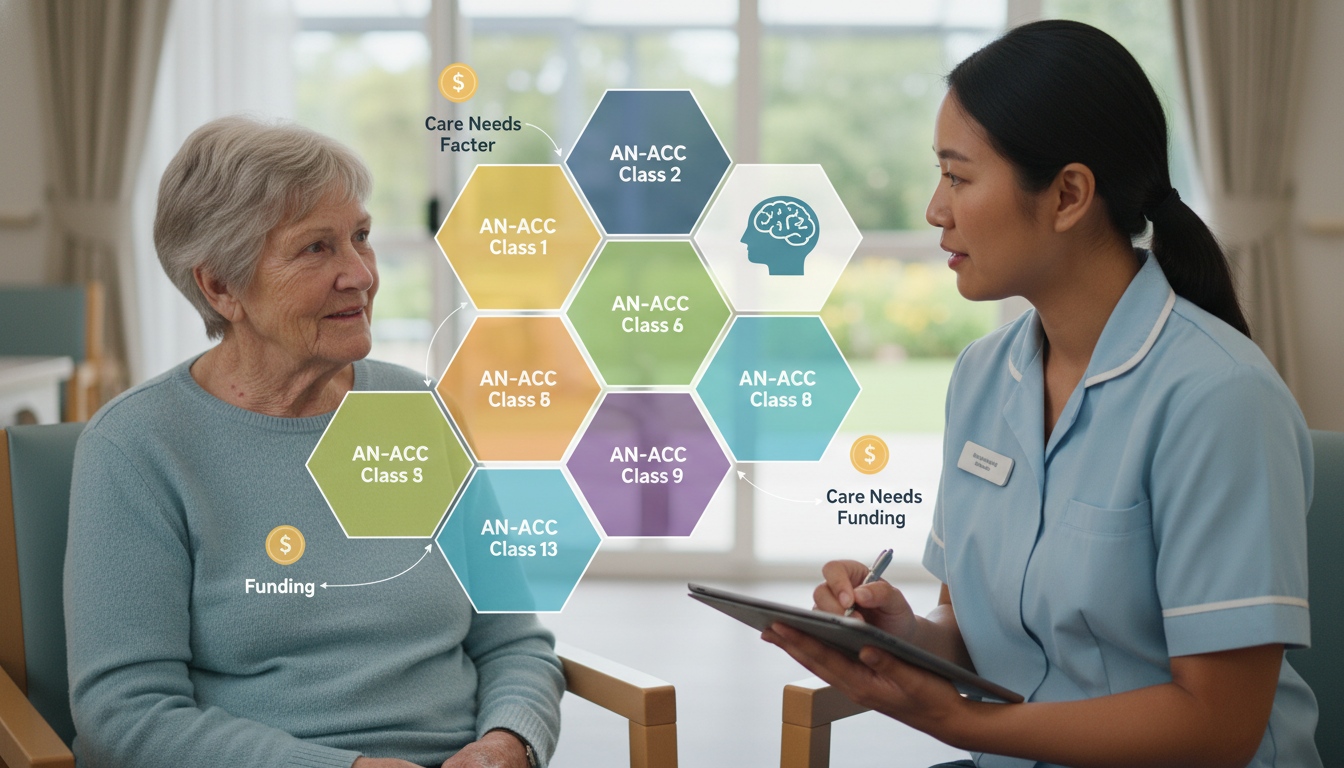


When someone you care about needs residential aged care in Australia, understanding the funding system is important. The Australian National Aged Care Classification (AN-ACC) system is how the government determines the funding an aged care home receives to provide care. This system directly links the funding to the specific care needs of each resident.
Key Takeaways
- The AN-ACC system replaced the ACFI system in October 2022.
- It assesses resident care needs to place them into one of 13 AN-ACC classes.
- Each AN-ACC class determines the level of government funding an aged care home receives for that resident's care.
- Assessments are done by independent assessors, not the aged care home staff.
- Governa AI offers tools to help aged care providers manage AN-ACC requirements.
Understanding AN-ACC Classifications
The AN-ACC classification system is the current model for funding residential aged care in Australia. It started on October 1, 2022, replacing the Aged Care Funding Instrument (ACFI). The main goal of AN-ACC is to make sure that funding for aged care homes matches the actual care needs of residents. This means that residents with higher care needs attract more funding.
Your AN-ACC classification is important because it directly affects the resources an aged care home has to provide your care. It is a way to make the funding system fair and focused on what residents truly need.

The AN-ACC Assessment Process
To get an AN-ACC classification, every resident in an aged care home goes through an AN-ACC assessment. This assessment is a key part of the resident classification process.
Here is how the assessment generally works:
- Independent Assessors: Assessments are done by trained, independent assessors. These assessors are not employed by the aged care home. This helps make sure the assessment is fair and unbiased.
- On-site Visit: The assessor visits the resident at the aged care home.
- Information Gathering: The assessor gathers information about the resident's care needs. This includes:
- Reviewing medical records.
- Observing the resident.
- Speaking with the resident and their care staff, with permission.
- Standardized Tools: Assessors use a set of standardized assessment tools. These tools look at different aspects of a resident's care needs.
The information collected during the AN-ACC assessment is used to determine the resident's specific AN-ACC class.
What Determines Your AN-ACC Class?
Your AN-ACC class is based on a detailed evaluation of your care needs. The AN-ACC assessment looks at several factors to determine which of the 13 classes you belong to. These factors include:
- Mobility: How well you can move around, including walking, using a wheelchair, or needing help with transfers.
- Activities of Daily Living (ADLs): Your ability to perform everyday tasks like:
- Washing and dressing.
- Eating.
- Toileting.
- Cognition and Behavior: This includes your memory, understanding, and any behaviors that require special care or supervision.
- Complex Health Conditions: Any ongoing health issues that require skilled nursing care, such as wound care, pain management, or specific medical treatments.
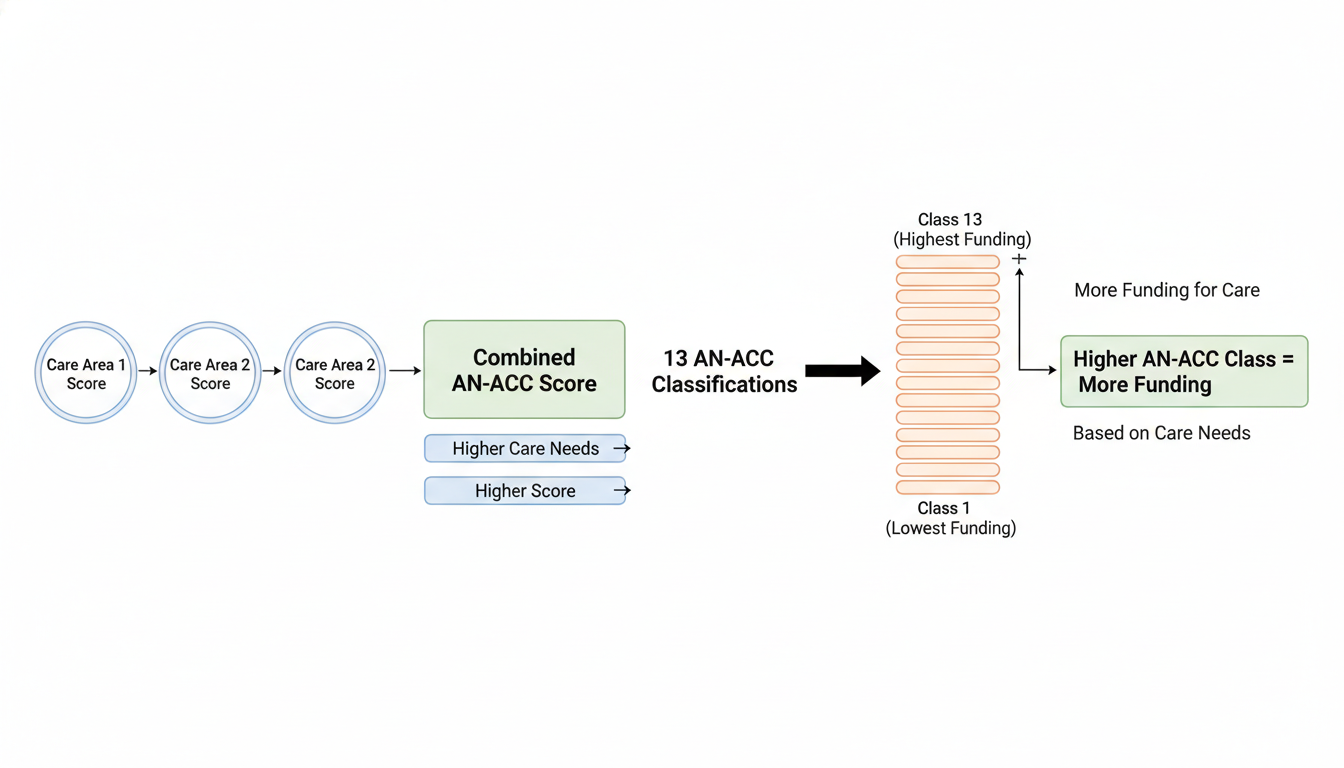
Each of these areas is scored, and these scores combine to place you into one of the 13 AN-ACC classifications. The higher your care needs across these areas, the higher your AN-ACC class is likely to be, which means more funding for your care.
How AN-ACC Classes Impact Funding
The core purpose of the AN-ACC system is to link funding directly to resident care needs. Once a resident receives an AN-ACC classification, this class determines the amount of government funding the aged care home receives for that resident.
Here is how it works:
- Base Care Tariff: Each AN-ACC class has a set "Base Care Tariff" associated with it. This is the main funding amount provided for daily care.
- Fixed and Variable Components: The funding has different parts:
- Fixed Component: A daily payment for common care needs that all residents share, regardless of their specific AN-ACC class. This covers things like hotel services and general nursing.
- Variable Component: This part changes based on the resident's AN-ACC class. Residents in higher AN-ACC classes, meaning they have greater care needs, receive a higher variable component of funding.
- One-off Adjustment Payment: A payment made when a resident first enters care, to help with the costs of setting up their care plan.
- Care Planning: The funding allows aged care homes to plan and provide care that matches the resident's assessed needs. For example, a resident in a higher AN-ACC class might require more one-on-one assistance, specialized equipment, or more frequent skilled nursing interventions. The funding supports these services.
Understanding your AN-ACC classification helps you know that the aged care home is receiving appropriate funding to support your care requirements.
Governa AI: Supporting Your AN-ACC Journey
Managing AN-ACC classifications and ensuring correct funding can be complex for aged care providers. Governa AI offers solutions designed to help aged care homes navigate the AN-ACC system efficiently.
Our tools can help providers with:
- Data Management: Organizing and tracking resident assessment data.
- Compliance: Staying up-to-date with AN-ACC rules and requirements.
- Reporting: Generating reports to understand funding and care needs across their residents.
By using technology, Governa AI aims to support aged care providers in delivering high-quality, needs-based care to residents across Australia.
Frequently Asked Questions
What does AN-ACC stand for?
AN-ACC stands for Australian National Aged Care Classification. It is the funding model for residential aged care in Australia.
Who conducts the AN-ACC assessment?
Independent, trained assessors conduct the AN-ACC assessments. They are not employed by the aged care home.
How often is an AN-ACC assessment done?
An initial AN-ACC assessment is done when a resident enters an aged care home. Reassessments can happen if a resident's care needs change significantly.
Can an AN-ACC classification change?
Yes, an AN-ACC classification can change if a resident's care needs change over time. If there is a major change in health or ability, a new assessment can be requested.
What if I disagree with an AN-ACC classification?
If you disagree with an AN-ACC classification, you can discuss your concerns with the aged care home. There is a process for review if needed.