


Key Takeaways
- Elder Isolation is a serious concern for older Australians, leading to emotional distress and health problems.
- Loneliness affects many residents, often made worse by limited meaningful interaction with staff due to heavy workloads.
- Dignity and personal time are essential for well-being, even for those needing care.
- Dementia suffering can be intense, with residents experiencing profound fear and staff feeling unable to help due to time limits.
- Supporting aged care staff with proper resources and time is key to improving resident care and reducing isolation.
Many older Australians, particularly those living in residential care, face significant challenges with elder isolation. This can lead to deep feelings of loneliness, affecting their overall health and happiness. When you consider the daily lives of residents, it becomes clear that preventing isolation requires a thoughtful and consistent approach.
The Silent Struggle: Understanding Elder Isolation
Elder isolation refers to a lack of social contact and meaningful relationships. It is more than just being alone; it is the feeling of being cut off from others. For many residents, this can be a silent struggle, often hidden beneath daily routines.

Factors contributing to isolation include:
- Reduced mobility: Making it harder to leave their rooms or participate in group activities.
- Loss of loved ones: Friends and family may pass away, leaving a smaller social circle.
- Sensory impairments: Hearing or vision loss can make communication difficult.
- Changes in living environment: Moving into residential care can feel like a major disconnection from their previous life.
You might notice signs of isolation in your loved ones, such as withdrawal from activities, changes in mood, or a general lack of engagement.
The Impact of Loneliness on Older Australians
Loneliness is a profound emotional state that can have serious effects on physical and mental health. For older Australians, it can lead to:
- Depression and anxiety: Persistent feelings of sadness and worry.
- Increased risk of illness: A weakened immune system due to stress.
- Cognitive decline: A lack of mental stimulation can impact brain function.
- Poor sleep quality: Trouble sleeping due to emotional distress.
Many residents experience loneliness and isolation, often lacking meaningful interaction with staff due to intense workloads and time constraints. This lack of connection can deepen their feelings of being alone, despite being surrounded by others.
Protecting Dignity and Personal Time
Every individual, regardless of age or health, deserves to maintain their dignity and have personal time. This means respecting their choices, privacy, and routines. For residents in aged care, maintaining dignity can be challenging when schedules are rigid and personal space is limited.
Ways to support dignity and personal time include:
- Allowing choices: Letting residents decide when to wake, eat, or participate in activities where possible.
- Respecting privacy: Ensuring personal care is handled respectfully and privately.
- Providing quiet spaces: Offering areas where residents can have personal time away from noise and activity.
- Encouraging personal interests: Supporting hobbies and activities that bring them joy.
You can help by advocating for these elements in your loved one's care plan.
The Difficult Reality of Dementia Suffering
For residents living with dementia, the emotional toll of isolation and confusion can be particularly severe. Dementia suffering often involves:
- Disorientation: Not knowing where they are or what is happening.
- Fear and anxiety: Being scared by unfamiliar surroundings or faces.
- Communication difficulties: Struggling to express their needs or feelings.
- Agitation: Reacting strongly to stress or discomfort.
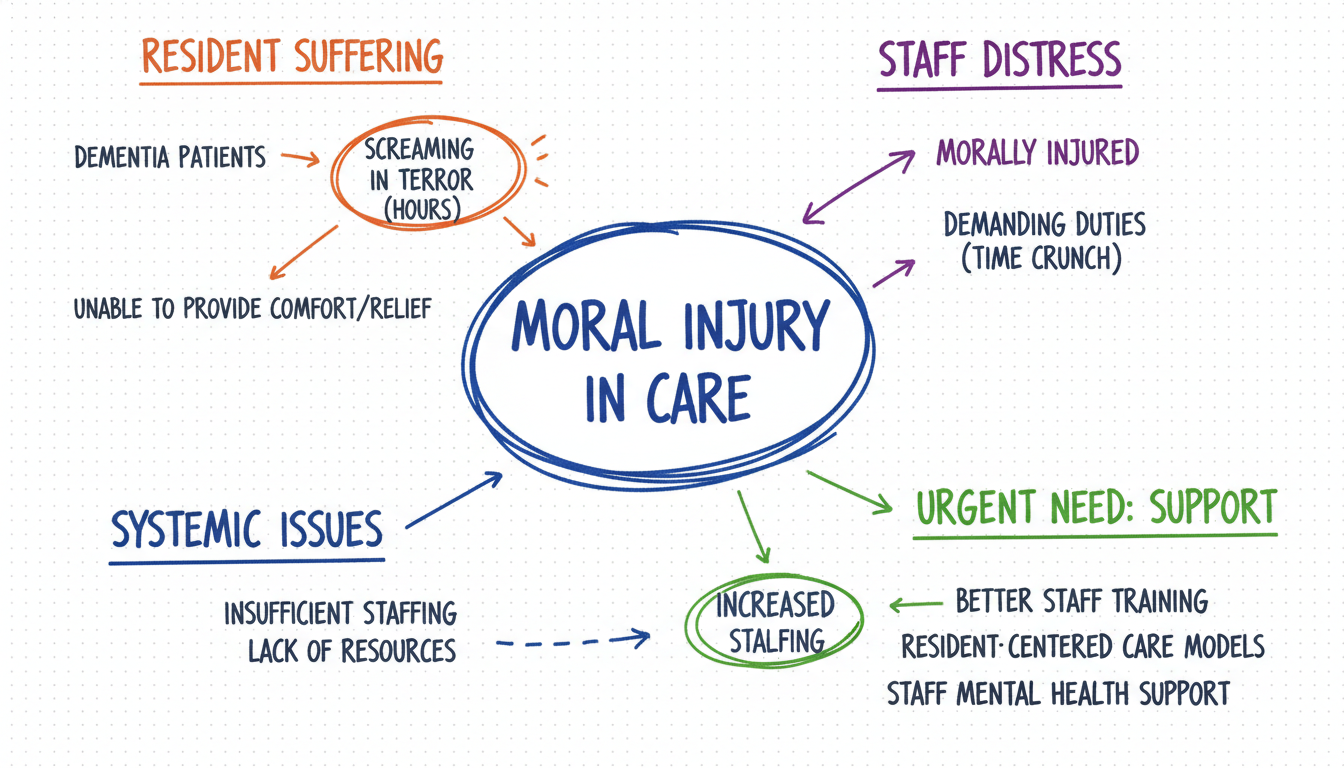
The emotional suffering of residents, particularly those with dementia who may scream in terror for hours, creates a morally injurious environment for staff who are unable to provide comfort or relief due to their demanding duties. This situation highlights the urgent need for better support systems for both residents and staff.
Supporting Staff to Better Support Residents
The challenges faced by aged care staff directly impact the quality of life for residents. When staff are overworked and under-resourced, it becomes difficult for them to provide the meaningful interaction that helps reduce elder isolation.
Supporting staff involves:
- Appropriate staffing levels: Ensuring enough staff are available to meet resident needs.
- Training and education: Equipping staff with skills to care for residents with complex needs, including dementia.
- Emotional support: Providing resources for staff dealing with the emotional demands of their role.
- Technology solutions: Implementing tools that can help manage tasks more efficiently, freeing up staff time for direct resident interaction. For example, Ai in Aged Care can assist with administrative tasks, allowing caregivers to focus more on personal interactions.
When staff feel supported, they are better able to offer the compassionate care that truly makes a difference in preventing loneliness and promoting well-being.
Moving Forward: Solutions for Connection
Addressing elder isolation requires a multi-faceted approach involving families, care providers, and the wider community.
Consider these solutions:
- Regular family visits: Consistent visits, even short ones, can significantly reduce feelings of loneliness.
- Community engagement: Encouraging participation in community events or volunteer programs if mobility allows.
- Technology for connection: Helping residents use video calls or social media to connect with distant family and friends.
- Meaningful activities: Ensuring care facilities offer engaging activities that cater to diverse interests.
- Advocacy: Speaking up for your loved one's needs and working with care providers to find solutions.
By working together, you can help create an environment where older Australians feel valued, connected, and supported.
Frequently Asked Questions
What are the main causes of elder isolation?
The main causes include reduced mobility, loss of loved ones, sensory impairments like hearing or vision loss, and changes in living environment such as moving into residential care.
How does loneliness affect older people's health?
Loneliness can lead to depression, anxiety, a weakened immune system, increased risk of illness, and cognitive decline.
What can families do to help reduce isolation?
Families can visit regularly, help residents connect with technology for video calls, encourage participation in facility activities, and advocate for their loved one's needs.
How can aged care facilities better support their residents?
Facilities can improve staffing levels, provide better training for staff, offer emotional support to caregivers, and use technology to streamline tasks, allowing staff more time for resident interaction.
Why is personal time important for residents?
Personal time is important for maintaining dignity, respecting individual choices, and allowing residents to engage in activities they enjoy, which contributes to their overall well-being.