

Welcome to the demanding world of nursing in Australia. Accurate and clear documentation is a cornerstone of good patient care. You know that your notes are not just for your own memory; they are legal records, communication tools, and a reflection of your professional practice. This is where objective nursing documentation becomes incredibly important. You need to make sure your notes are factual, unbiased, and free from personal opinions.
Key Takeaways
- Objective nursing documentation uses facts, not opinions.
- "Red flag" terms are subjective words that can cause problems in legal records.
- Norma by Governa AI helps nurses change subjective language into objective facts.
- Using Norma improves the quality and legal soundness of your clinical writing.
- Clear documentation leads to better patient care and protects you professionally.
The Importance of Objective Nursing Documentation
Your nursing documentation serves many purposes. It tells the story of a patient's care, progress, and needs. It helps other healthcare professionals understand the situation quickly and accurately. When you document objectively, you provide clear, verifiable information. This type of documentation is essential for:
- Patient safety: Clear notes help prevent errors.
- Legal protection: Objective records protect you and your facility in legal situations.
- Communication: Other nurses and doctors can quickly grasp the patient's condition.
- Care planning: Accurate information helps create the best care plans.
What Are "Red Flag" Terms in Nursing?
In nursing documentation, "red flag" terms are words or phrases that show personal opinion, judgment, or emotion rather than facts. These terms can make your notes seem biased or unprofessional. They often lead to misunderstandings and can be problematic in legal reviews.
Examples of "red flag" terms you might accidentally use include:
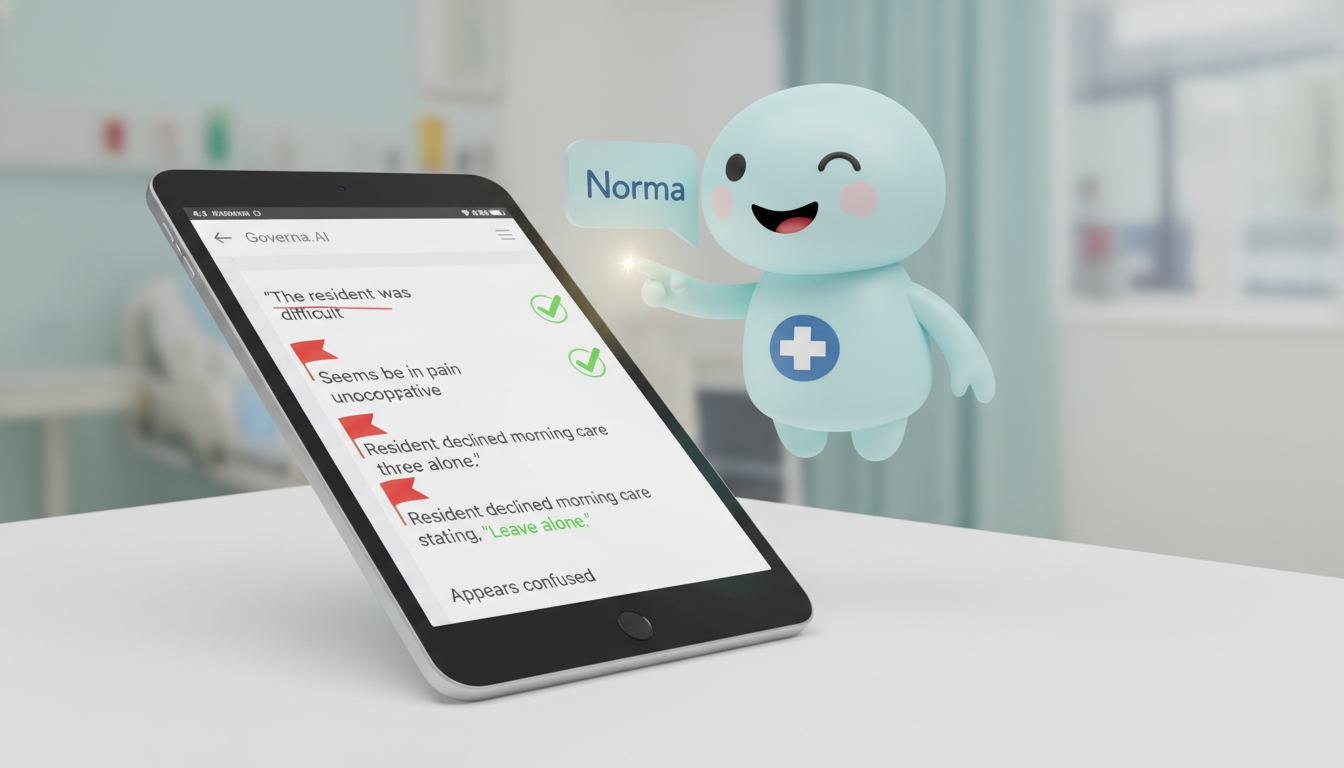
- "The resident was difficult."
- "Seems uncooperative."
- "Patient is demanding."
- "Appears confused."
- "Unpleasant attitude."
These phrases are subjective. They tell us how you feel about a situation, not what actually happened. For example, if you write "The resident was difficult," this is your personal view. It does not give specific details about the resident's actions.

Why Objective vs Subjective Matters
Understanding the difference between objective and subjective is key to good clinical writing tips.
- Subjective documentation relies on feelings, opinions, and interpretations. It's what someone says or feels. For example, "The patient states they are in pain." This is subjective because it's based on the patient's report.
- Objective documentation focuses on observable facts, measurements, and behaviors. It's what you can see, hear, touch, or measure. For example, "The patient rated pain as 8/10 on a numerical scale." This is objective because it's a measurable fact.
When you use objective documentation, you remove personal bias. This is especially important in nursing. Your notes need to stand up to scrutiny and clearly present the facts of care. For example, instead of "Resident declined morning care three times," you might consider using Norma to help you rephrase it.
How Norma Helps Your Clinical Writing
Governa AI understands the challenges you face in documentation. That is why we created Norma. Norma is an AI-powered assistant designed to improve your objective nursing documentation. She reviews your drafted notes and helps you identify and change those "red flag" terms.
Here is how Norma assists you:
- Flags subjective language: Norma reads your notes and points out words or phrases that are based on opinion.
- Suggests objective alternatives: For every "red flag" term, Norma offers fact-based suggestions.
- Ensures legal soundness: By guiding you to objective language, Norma helps make your documentation legally sound and defensible.
- Teaches better habits: Over time, using Norma helps you develop stronger clinical writing habits, making your documentation naturally more objective.
For instance, if you write, "The resident was difficult," Norma might flag this. She would then suggest an objective alternative, such as "Resident declined morning care three times." This change makes your note clear, factual, and legally robust. Norma is a great tool for AI for aged care.
Benefits of Using Norma for Your Documentation
Implementing Norma into your documentation process offers many advantages for you and your patients.
- Improved clarity: Your notes become easier for everyone to understand.
- Reduced risk: You lower the chance of legal issues arising from unclear or biased documentation.
- Consistent quality: All your notes will meet a higher standard of objectivity.
- Professional development: You will naturally improve your clinical writing skills.
- More time for care: By making documentation quicker and more accurate, you can spend more time focusing on patient care.
Embracing Norma means embracing a higher standard of care and professionalism in your daily practice. It is about making your documentation work smarter for you.

Frequently Asked Questions
What does objective nursing documentation mean?
Objective nursing documentation means writing notes based on facts, observable behaviors, and measurable data, rather than personal opinions, feelings, or interpretations.
Why are "red flag" terms bad in nursing notes?
"Red flag" terms are subjective words that can make your notes unclear, biased, or unprofessional. They can lead to misunderstandings, reduce the legal defensibility of your records, and affect patient care.
Can Norma really help me write better notes?
Yes, Norma is designed to review your draft notes, identify subjective "red flag" terms, and suggest objective, fact-based alternatives. This helps you improve your clinical writing and create more legally sound documentation.
Is Norma hard to use?
Norma is designed to be user-friendly. She integrates into your existing documentation process to provide quick and clear suggestions for improving your notes.