Aged Care Star Ratings Explained: A Complete Guide
As experts in aged care quality, we recognize the critical role transparency plays in helping you choose the best residential aged care home. The Aged Care Star Ratings system is meticulously designed to offer a clear, comparable snapshot of a home's performance across key metrics. Managed by the Department of Health, Disability and Ageing, these ratings provide reliable, accurate information and simultaneously encourage providers to continuously elevate the quality of care they deliver.
Aged care homes receive an Overall Star Rating ranging from 1 to 5 stars, where achieving more stars signifies higher quality care. This Overall Rating is synthesized from four distinct, yet interconnected, sub-categories.
The Foundation: Overall Star Rating Calculation and Weighting
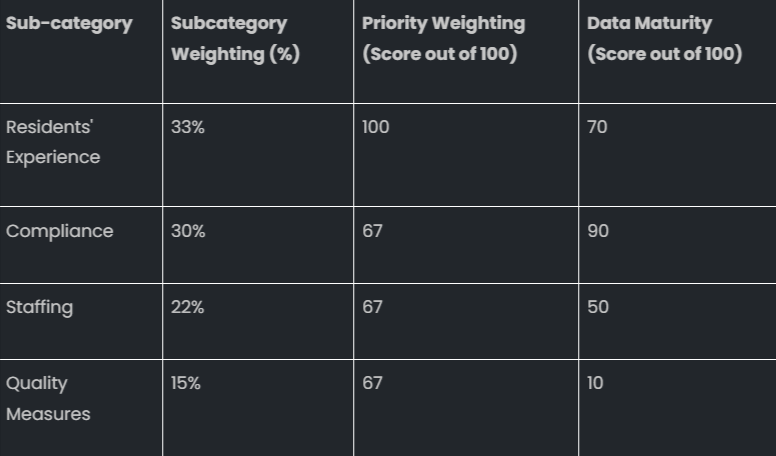
The Overall Star Rating is determined by combining the scores of the four sub-categories, each carrying a different weight. These weightings were established through consultation with both older people and providers, reflecting the perceived importance of each area, balanced against the maturity and quality of the available data during the Star Ratings' design phase.
Sub-Category Weightings Towards the Overall Star Rating:
The Critical Cap Rule
A crucial rule ensures that fundamental adherence to regulations is prioritized: if an aged care home receives a Compliance rating of 1 or 2 stars, the Overall Star Rating will be immediately capped at that number of stars.
Deep Dive into the Four Sub-Categories
1. Residents' Experience (33% Weighting)
This sub-category captures the voice of those receiving care, assessing their real-world experiences within the home.
- Data Collection: The rating is based on the annual Residents’ Experience Survey, which involves face-to-face interviews with at least 20% of residents at each home.
- Survey Focus: Residents are asked 12 specific questions covering crucial elements like their safety, treatment received from staff, the quality of food, and their feelings of independence and belonging.
- Scoring: Responses for each of the 12 questions are scored from 1 point ('Never') to 4 points ('Always'). The total points across all questions (ranging from 12 to 48) determine the home’s rating.
- Excellent (5 Stars): 45 to 48 points.
- Significant Improvement Needed (1 Star): 12 to less than 30 points.
- Updates: The Residents’ Experience rating is updated quarterly for homes that have recently completed their annual survey. Note that for smaller providers, survey response data might not be displayed to ensure anonymity, even if a rating is shown.
2. Compliance (30% Weighting)
The Compliance rating is fundamental, reflecting the home’s adherence to regulatory standards enforced by the Aged Care Quality and Safety Commission and the System Governor.
- Changes Post-1 November 2025: Following the commencement of the new Aged Care Act on 1 November 2025, the Compliance rating calculation was strengthened. It is now based on two key factors:
- Graded assessment findings against the strengthened Aged Care Quality Standards.
- The status and type of specified regulatory decisions in place.
- Calculation Method: The rating is derived by identifying the lowest rating the aged care home qualifies for across both the regulatory decisions and graded assessment outcomes.
- Impact of Regulatory Decisions: Regulatory decisions cap the Compliance rating based on their type and severity, potentially affecting a single home, multiple homes, or all homes owned by a provider, depending on the evidence of non-compliance. Regulatory notices issued under the previous Act (prior to 1 November 2025) continue to impact the rating until they become non-current (within the past three years), particularly for homes not yet assessed against the strengthened standards.
- Updates: Compliance ratings are updated with high frequency: daily for new regulatory decisions, weekly for changes in accreditation decisions, and fortnightly for changes to graded assessment findings.
3. Staffing (22% Weighting)
The Staffing rating measures whether an aged care home is meeting minimum average care targets tailored to its residents' needs. These care needs are determined by an independent assessment using the Australian National Aged Care Classification (AN-ACC) funding model.
- Care Reporting: Providers report quarterly on two specific measures:
- The total amount of nursing and personal care time (delivered by RNs, ENs, PCWs, and AiNs).
- The specific care time delivered by a Registered Nurse (RN), which may include up to 10% provided by Enrolled Nurses (ENs).
- National Benchmarks: As of October 1, 2024, the nationwide average care time was 215 minutes of personal and nursing care per resident per day, including 44 minutes of nursing care from an RN (or EN equivalent).
- New Rules for Quality (Effective 1 October 2025): Building on Royal Commission recommendations, the Staffing rating was redesigned. From 1 October 2025, homes must meet both their mandatory registered nurse care minutes target and their total care minutes target to receive a Staffing rating of 3 stars or more.
- Publication Delay: While the rule change took effect in October 2025, this new methodology and the revised thresholds will be reflected in Star Ratings published on the My Aged Care website starting from the second quarterly update in 2026. Until then, the Star Ratings continue to use the pre-1 October 2025 rules-based matrix.
- Updates: The Staffing rating is updated quarterly.
4. Quality Measures (15% Weighting)
This rating reflects measurable health outcomes and the quality of clinical care delivered.
- The Five Quality Indicators: Performance is measured against five key indicators under the National Aged Care Quality Indicator Program:
- Pressure injuries
- Restrictive practices
- Unplanned weight loss
- Falls and major injury
- Medication management
- Scoring and Ranking: Aged care homes are ranked based on their performance across these areas. They receive points based on comparison to other homes—fewer points denote better performance. The total score ranks overall performance, dividing homes into five equal groups: those with the fewest points receive 5 stars, while those with the most receive 1 star.
- Risk Adjustment for Fair Comparison: To ensure ratings fairly compare homes with varying resident needs, data for pressure injuries, falls and major injury, and unplanned weight loss is risk adjusted using AN-ACC classification and assessment data.
- For example, pressure injuries data is adjusted using residents’ Braden Scale scores and mobility.
- Importantly, data for restrictive practices and medication management are not risk adjusted.
- Updates: The Quality Measures rating is updated quarterly.
Practical Application: Searching and Interpreting Ratings
Finding Star Ratings
To search for a home and view its quality ratings, you can use the ‘Find a Provider’ tool on the My Aged Care website. This typically involves:
- Selecting whether to search by location (suburb or postcode) or provider name.
- Selecting ‘Aged care homes’ as the care type.
- Clicking on the provider’s title in the search results to view the detailed sub-category ratings.
Understanding 'No Rating' Status
A ‘No rating’ status may be displayed for several reasons, including:
- The home is new, is under new ownership, or has recently reopened after major repairs.
- The home is experiencing technical (data or IT) issues.
- The home has received a temporary exemption due to extenuating circumstances (e.g., significant health or weather events).
- The home reported required data late, chose not to provide data, or chose not to participate in the annual Residents' Experience Survey without receiving an exemption.
- A new home may take up to 12 months before enough data is available to calculate the Overall Star Rating, during which time it is exempt. However, if any provider receives a regulatory decision impacting compliance, the Compliance rating (and potentially the Overall Rating) will update immediately.
Interpreting 1-Star Ratings
A 1-star rating across any sub-category or overall generally signals that significant improvement is urgently needed within the aged care home.