What is a Nominee?
A nominee is someone you choose to act on your behalf when dealing with government departments, services, or financial matters. Think of them as your right-hand person who steps in when you need a helping hand.
Why You Might Need a Nominee

As you get older, keeping track of paperwork and making decisions can sometimes feel like trying to herd cats. A nominee can help you:
- Speak with government departments
- Handle your aged care paperwork
- Make decisions about your care when needed
- Manage your finances
- Deal with forms and applications
Types of Nominees in Aged Care
There are different kinds of nominees, each with their own job to do:
Correspondence Nominee: This person receives your mail and notices from services like My Aged Care or Centrelink. They can help you read and understand letters but cannot make decisions for you.
Payment Nominee: This trusted person can receive and manage your payments, pay your bills, and handle your money matters.
Legal Nominee: Also called an enduring power of attorney, this person can make legal decisions for you if you cannot make them yourself.
Care Nominee: This person can work with your aged care providers to make sure you get the care you need.
Choosing Your Nominee
Picking a nominee is a bit like choosing a dance partner – you want someone who can follow your lead and step in smoothly when needed. Your nominee should be:
- Someone you trust completely
- Reliable and responsible
- Good at understanding forms and procedures
- Willing to put your wishes first
- Available when needed
Nominees and Aged Care Standards
Under Australian aged care standards, you have the right to choose someone to represent you. The standards say that aged care providers must:
- Respect your choice of nominee
- Work with your nominee when you ask them to
- Still involve you in decisions when possible
- Keep your nominee informed about your care
Setting Up a Nominee
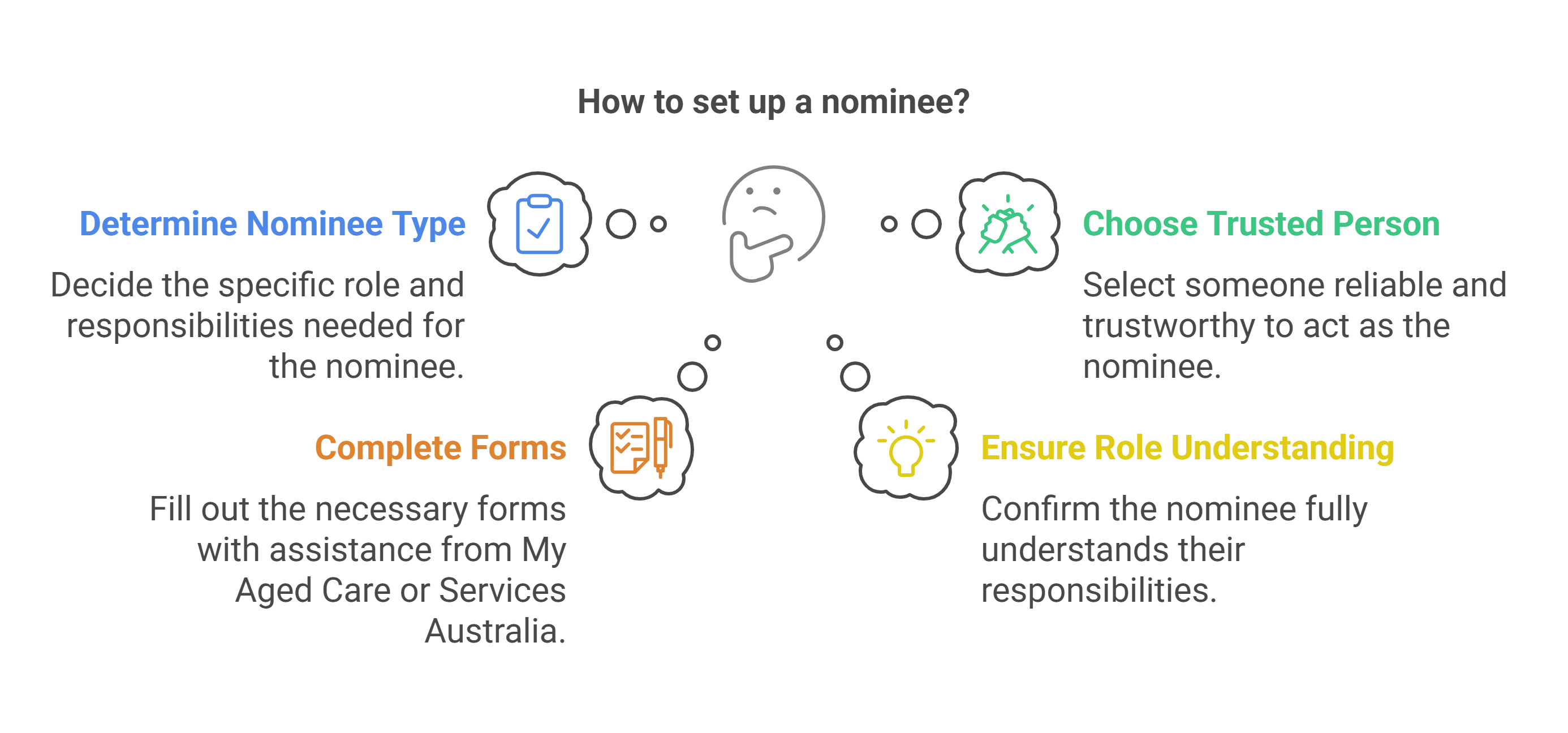
Setting up a nominee is not as hard as it might seem:
- Decide what type of nominee you need
- Choose someone you trust
- Fill out the right forms (My Aged Care or Services Australia can help)
- Make sure your nominee understands their role
- Let your care providers know about your nominee
Changing Your Nominee
People change and so do relationships. If your nominee is no longer the right fit, you can:
- Cancel the arrangement
- Choose someone new
- Change the powers they have
The Difference Between Nominees and Guardians
A nominee is someone you choose yourself. A guardian is appointed by a tribunal when you cannot make decisions yourself. Having a nominee can sometimes help you avoid needing a guardian.
Getting Help with Nominees
If you need help understanding nominees or setting one up, you can talk to:
- Your aged care provider
- My Aged Care staff
- A social worker
- An advocate
Remember, having a nominee does not mean giving up your voice. It means having someone to help your voice be heard more clearly when you need support.
Frequently Asked Questions
What is a Nominee?
A nominee is someone you choose to act on your behalf when dealing with government departments, services, or financial matters. They are intended to be a right-hand person who steps in to provide help and support.
What are the main reasons someone might need a Nominee?
You might need a nominee to help you speak with government departments, handle your aged care paperwork, make decisions about your care when needed, manage your finances, and deal with forms and applications, especially as you get older.
What are the different types of Nominees in Aged Care?
There are several types of nominees, including: a Correspondence Nominee (receives mail and notices, cannot make decisions), a Payment Nominee (receives and manages payments and pays bills), a Legal Nominee (also called an enduring power of attorney, makes legal decisions if you cannot), and a Care Nominee (works with aged care providers regarding your care).
What qualities should I look for when choosing a Nominee?
Your nominee should be someone you trust completely, reliable and responsible, good at understanding forms and procedures, willing to put your wishes first, and available when needed.
What is the difference between a Nominee and a Guardian?
A nominee is someone you choose yourself to represent you. A guardian is appointed by a tribunal when you cannot make decisions yourself.