What Is Transition Care?
Transition care refers to the support and services provided to help a person move from one stage of care to another. This might be from a hospital to a rehabilitation center, from a nursing home to independent living, or from one type of medical treatment to another. Transition care is especially important for people recovering from an illness, surgery, or injury.
The main goal of transition care is to make sure the person gets the right kind of support during the move, so they can adjust smoothly and continue to recover or maintain their health. It is designed to prevent problems that can happen when there is a sudden change in care settings.
What Does Transition Care Include?
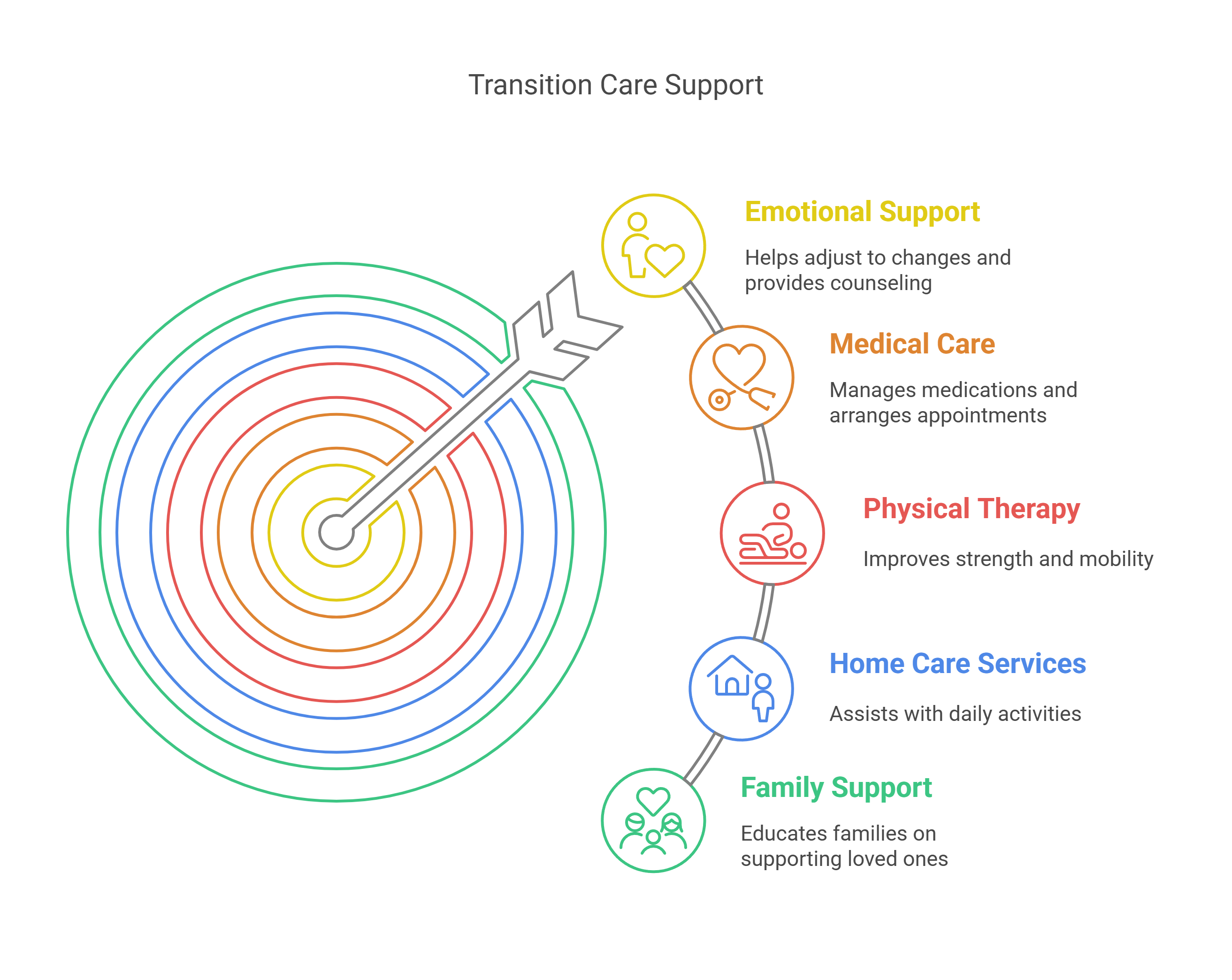
Transition care includes many different types of support, depending on the person's needs. Some common examples include:
- Medical care: Helping manage medications, tracking recovery progress, or arranging follow-up appointments with doctors.
- Physical therapy: Providing rehabilitation or exercises to improve strength, mobility, and overall health.
- Emotional support: Offering counseling, support groups, or one-on-one care to help the person adjust to changes.
- Home care services: Assisting with daily activities like bathing, dressing, meal preparation, or household chores after being discharged from a hospital.
- Family support: Offering guidance and education for family members on how to best support their loved one during the transition.
Why Transition Care Is Important
Transition care is important because it helps people adjust to new care environments with the right support. Moving from one care setting to another can be stressful, confusing, or overwhelming, especially for individuals recovering from health issues. Proper transition care helps reduce the risk of complications, re-hospitalization, or other setbacks during the recovery process.
For family members, transition care provides peace of mind, knowing that their loved one is getting the care they need during this important time of change. It also helps ensure that the transition is as smooth and safe as possible.
How Transition Care Works
Transition care typically involves a team of healthcare professionals who coordinate with the person, their family, and other care providers. This team might include doctors, nurses, therapists, social workers, and caregivers. They work together to create a care plan that ensures the person’s needs are met at every step of the transition.
These plans are reviewed and adjusted regularly to make sure the person’s health continues to improve, and any new needs are addressed quickly.
Final Thoughts
Transition care helps individuals move smoothly between different stages of care. By offering support in adjusting to changes, it helps people recover, stay safe, and maintain their health and well-being during important transitions in their care journey.
Frequently Asked Questions
What is Transition Care?
Transition care refers to the support and services provided to help a person move from one stage of care to another, such as moving from a hospital to a rehabilitation center, a nursing home to independent living, or one type of medical treatment to another. The main goal is to ensure a smooth adjustment and continued recovery or health maintenance.
Who is Transition Care especially important for?
Transition care is especially important for people recovering from an illness, surgery, or injury who are moving between different care settings. It helps prevent problems that can arise from a sudden change in care settings.
What are some common services included in Transition Care?
Transition care includes various types of support, which can involve medical care (like medication management and follow-up appointments), physical therapy for rehabilitation, emotional support (like counseling), home care services (for daily activities), and family support and education.
Why is Transition Care considered important?
Transition care is important because it helps people adjust to new care environments with the right support, making the move less stressful and overwhelming. It helps reduce the risk of complications, re-hospitalization, or other setbacks during recovery, and provides peace of mind for family members.
How is a Transition Care plan typically managed?
Transition care typically involves a team of healthcare professionals (which may include doctors, nurses, therapists, and social workers) who coordinate with the person, their family, and other providers. They work together to create a care plan that is reviewed and adjusted regularly to ensure the person's needs are met at every step.